
“It Costs You Nothing to Be Kind”: The Wilsons’ Gift
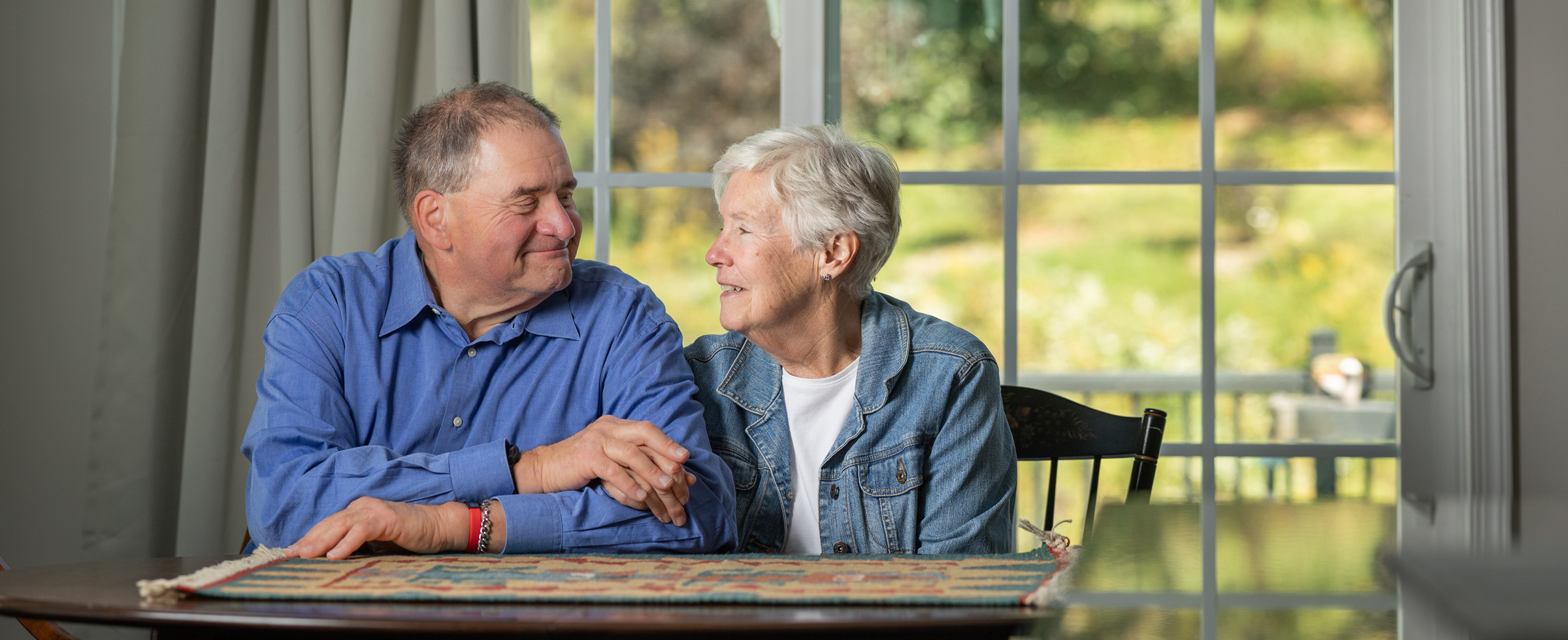
Mark and Mary Wilson never saw themselves as the kind of people who start charitable funds. Two retired teachers from working-class roots, they grew up believing philanthropy belonged to the Heinzes and the Carnegies: industrial giants and millionaires many times over whose names grace buildings and are synonyms for charity. But adding Wilson to the list? That seemed impossible.
What they discovered instead was that everyday people can have a tremendous impact, and that realization changed everything.
A Foundation Built on Giving Back
Mark grew up in New Castle, Mary in the North Hills. Both came from lower-middle-class families where one lesson was passed down through generations: you give back, think of others and stay involved in your community.
They carried this value into careers as educators: a service-oriented lifestyle that inevitably bred humility as defining character traits. Mark’s sharpened wit from years of school teaching is paired with a self-deprecating humor; and Mary is economical with words. She can summarize one of Mark’s “long-winded responses” with just a phrase. They make a perfect pair.
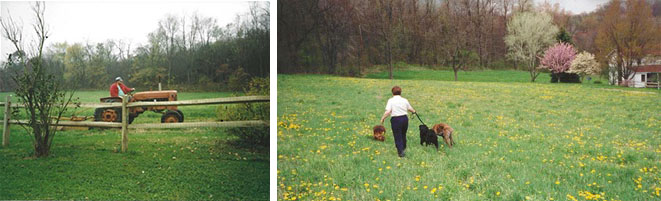
In 1996, they bought a 30-acre farm, once owned by the family of Mark’s best friend from college. The farm gave them privacy, room to breathe and space for a steady parade of inherited and rescue animals. Over the years, the Wilsons adopted 11 rescue dogs. Today, a rescue dog named Mugsy stays close to Mark’s side.
With no children of their own, the couple began asking a question that many people put off: what kind of legacy do we want to leave behind?
A Revelation for the “Average Joe and Josephine”
When the Wilsons met with their attorney, he suggested they consider The Pittsburgh Foundation.
“It was like a revelation to us,” Mark recalls. He had always assumed the Foundation was the purview of millionaires and big corporations, not “a couple of simple school teachers” from New Castle and the North Hills. Working with the Foundation team, the Wilsons opened a door they never knew existed. They received the guidance they needed to turn their intentions into action. They planned three funds and established two right away, building them up over time with steady contributions.
Three Funds, Three Passions
Each of the Wilsons’ funds reflects a cause close to their hearts. An important note about the Wilsons’ giving: because they have a field of interest fund and a scholarship fund, they are able to fund those directly using their qualified charitable distribution.
- Education: The Wilson-Moffett Families Memorial Scholarship Fund provides scholarships for deserving students in New Castle and Lawrence County. As educators, the Wilsons saw support for four-year college paths, but far less for the students pursuing skilled trades. They created this fund to change that.
- Veterans: The Harold and Ruth Kennedy Fund is named for Mary’s mother and stepfather. It honors veterans, including relatives who served in World War II, and Todd Siebert, a former student of Mark’s who was killed in Iraq.
- Animals: The Mark M. and Mary H. Wilson Fund supports animal shelters and welfare, an extension of the couple’s lifelong love for rescues.
“Where the Rubber Meets the Road”
The Wilsons shared one impactful story of a student who received a scholarship and the difference it made. A young man who was made fun of in traditional school, quiet and often underestimated, received their scholarship and enrolled at the Newcastle School of Trades to study welding.
There, he blossomed. His skill drew praise from his instructors. He earned a job. His boss promoted him several times and eventually led him to teach others in the shop. “His confidence just went through the roof,” Mark says. Today, he earns a good living in a career our economy desperately needs and in a community like New Castle, where industry once thrived but opportunity today has thinned. Stories like this hope to give the town a rebound.
A Thoughtful Giving Strategy
The Wilsons approached their giving with the same care they brought to teaching. Their strategy included several tools worth noting:
- A charitable trust, which will be funded by their life insurance policies, designed to support the charitable causes they care about.
- Qualified Charitable Distributions (QCDs): Through QCDs, the Wilsons give to charity directly from their IRAs. Rather than taking required minimum distributions (RMDs) as taxable income, the distributions go straight to charity, reducing their tax bill while seeing their gifts at work.
- A planned land gift of 19 to 20 wooded acres along Glade Run, a tributary near their former farm, to the Western Pennsylvania Conservancy. The land will remain a nature reserve, protected for generations.
Mark has a suggestion for fellow baby boomers. Instead of sitting on significant savings, much of it in IRAs, consider using your RMDs to make a QCD to a designated or field of interest fund: it offers a simple, efficient way to put some of that money to good use.
“It’s a win-win situation,” he says. It takes care of a person’s financial and tax interests while directing money somewhere it will do good for generations to come. His advice is practical: work with attorneys, accountants and tax professionals to spread the word, because once people understand the benefit, it becomes clear.
The Library That Never Burns
The Wilsons shared an African proverb: when an elder dies, a library burns to the ground. Inside that library lives knowledge, memory, and sometimes the means to touch future generations.
The Wilsons are keeping their library open. Through scholarships, a protected woodland and shelters for animals down on their luck, a couple of retired teachers from working-class Pennsylvania are proving that a lasting legacy is within reach for everyone.
As Mark’s father once told him, in words that have guided a lifetime of generosity: “It costs you nothing to be kind to people. It costs you nothing but a little bit of time.”
Related Content
Norine Minion: Endowed with a commitment to equity and justice
Challenging cultural mores and institutionalized injustices underpins Minion's dedication to equity and racial justice — and her connection to The Pittsburgh Foundation.
A Legacy of Faith, Service: The Alice McCaffrey Scholarship Fund
In 2013, the parishioners of Saints John and Paul Catholic Parish wanted to honor their pastor, Father Joseph McCaffrey, on his 25th anniversary as a priest. The parishioners’ gift was not for him, but a tribute to the woman who inspired his journey: his mother, Alice McCaffrey, who died in 2011.